How much would a real Iron Man suit cost?
Updated 2026-11-23 · 14 min read
Short answer
About $1.2 million buys the closest real hardware for every system, led by a £340,000 Gravity jet suit and a $400,000 F-35 helmet. Making those parts work as one flying, armored machine is a development program we estimate at $100 million to $1 billion, judging by the US military's $80 million TALOS suit and NASA's billion-dollar spacesuits. The film suit cannot be built at any price; a 3D-printed cosplay suit costs about $1,500.
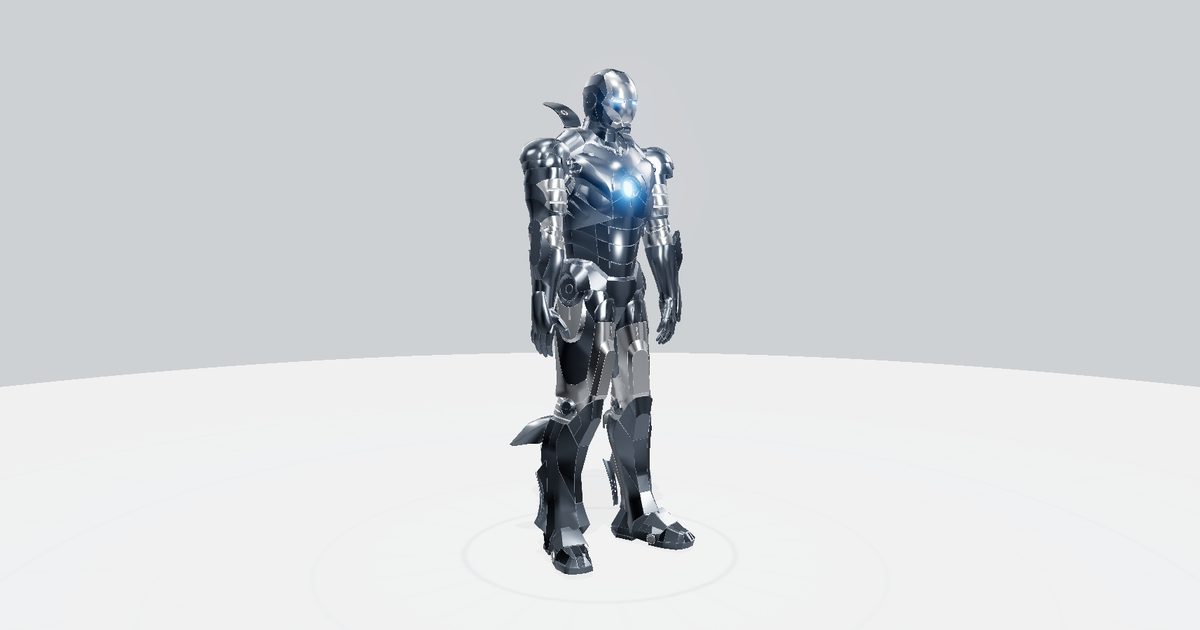
The short answer
There are three honest answers, because three different suits hide behind the question.
- The best real hardware, bought today: about $1.2 million. A Gravity Industries jet suit, a rented full-body exoskeleton, rifle plate over the whole body, an F-35 fighter helmet, thermal cameras, a robot computer, pilot oxygen and a liquid cooling system. Every price in that bill is a published one.
- Making those parts into one working suit: $100 million to $1 billion, our estimate. That is the scale of the real programs that attempted smaller versions of the job.
- The film suit: not for sale at any price. Its power, heat and g-forces break physics, not budgets.
- A cosplay suit: about $100 for a licensed helmet, roughly $1,500 for a full 3D-printed build.
Prices in pounds and euros are converted at the European Central Bank's reference rates for 20 November 2026: 1 euro = $1.099 and £1 ≈ $1.31.
Why the famous estimates are wrong
The figure most often repeated comes from io9 in May 2010: $100,420,000 for one suit. It has five line items: a fighter-jet helmet display ($54.1 million), Raytheon's XOS exoskeleton ($10 million), a portable nuclear power source ($36 million), two strap-on jet packs ($400,000) and wearable computers ($20,000). Those actually add up to $100,520,000, but the arithmetic slip is the small problem:
- The helmet and exoskeleton figures are development costs, the price of inventing a machine, not of buying one. Together they are 64% of the total.
- The power source is a Multi-Mission Radioisotope Thermoelectric Generator, which NASA says makes about 110 watts and weighs about 45 kg. The arc reactor in the films makes 3 GW, about 27 million times as much.
- There is no armor, no life support and no cooling.
So 99.6% of the famous $100 million is two research budgets and a generator with the output of a light bulb. The MoneySupermarket infographics went further, to $1.6 billion after Iron Man 2 and $10.086 billion in 2013, totals that cover several suits and reuse io9's $54.1 million helmet and $36 million reactor.
Both mix two different numbers. Separating them is the method of this page.
Parts versus program
- The parts: what the closest real hardware costs today, one unit, at a published price.
- The program: what it costs to engineer those parts into one machine that works. It is usually far larger.
The jet suit shows the gap. Gravity's suit flies on five microturbines of the JetCat P400-PRO class, which JetCat lists at €10,748 each before tax, about $11,800. Five engines come to about $59,000, yet the finished suit sold for £340,000. The engines are about 13% of the price. The rest is the airframe, fuel system, electronics, training and the years of development behind them.
Flight: the one part you can buy
The jet suit is the only Iron Man system ever sold as a product. In 2018 London's Selfridges offered nine Gravity suits at £340,000 each, about $446,000 at today's rate. Gravity has not published a newer sale price. Its site now sells flight experiences instead: £799 in Somerset or $1,950 in California for a two-hour test flight with two powered runs on a tethered rig, up to £6,600 or $8,500 for a full day.
That suit weighs 27 kg dry and makes roughly 1,200 N of thrust, enough for itself, a pilot and fuel, as the flight guide works out. It cannot lift an armored suit. Hovering an armored suit at 280 kg worn takes about 2,750 N:
- 2,750 N ÷ 425 N per P400-class engine = 6.5 engines, with no margin at all.
- Budget eight for control margin: 8 × $11,812 ≈ $94,500 in engines.
- Those eight weigh 32 kg themselves, which pushes the count up again.
The engines are affordable. A flying armored suit is not, for reasons that come later.
Motion and armor
The exoskeleton. The best full-body example, the Sarcos Guardian XO, was never sold outright. In December 2019 IEEE Spectrum reported that one cost $100,000 a year to rent, and Sarcos's chief executive presented the lab's work as what "30 years and $300 million" look like. The company renamed itself Palladyne AI in 2024 and discontinued its hardware operations. Our bill counts three years of rental, $300,000. For a cheaper reference, Medicare set a payment rate of $91,032 in April 2024 for personal exoskeletons such as the ReWalk, which move only the legs, for people who cannot walk. The exoskeleton guide covers how these machines work.
The armor. The armor guide puts the suit's outer surface at about 2.4 m² and full rifle-rated coverage at about 100 kg. Plates are priced per piece, so convert to area. A medium SAPI-cut plate is 9.5 × 12.5 inches, or 0.0766 m², so the suit needs the equivalent of about 31 of them.
| Rifle plate | Price each | Per m² | 2.4 m² of coverage |
|---|---|---|---|
| US Army E-SAPI, average procurement cost | $450 | $5,900 | $14,100 |
| US Army lighter replacement plate (one vendor's is boron carbide on polyethylene) | $700 | $9,100 | $21,900 |
| Commercial Level IV plate (Hesco 4800), retail | $1,486 | $19,400 | $46,600 |
The Army figures are average unit procurement costs from a 2022 Naval Postgraduate School study; we assume the average plate is a medium. The retail figure is half of a $2,972 pair of medium plates. Flat torso plates are also the cheapest shape there is. Curved pieces for the limbs, joints and helmet would be custom work in tiny runs, and that price is not public.
The metal is almost free by comparison. A 3 mm Ti-6Al-4V shell over the same area is about 32 kg, and imported titanium sponge, the raw metal, was valued at an estimated $12 per kilogram in 2025. That is about $384 of titanium. The money goes into turning it into fitted, machined parts.
Helmet, sensors and computer
The closest real thing to the suit's helmet is the F-35's Gen III helmet-mounted display, widely reported at $400,000 each. UK figures put it at £216,000 to £288,000, about $283,000 to $378,000. The picture on the visor is not what makes it expensive. It is certified to fly a fighter and is fed by six sensors around the jet, as the HUD and sensors guide explains. A consumer mixed-reality headset, Apple's Vision Pro, costs $3,499.
The rest of the electronics is cheap:
- Computer: NVIDIA's Jetson AGX Thor developer kit, up to 2,070 FP4 teraflops of AI compute within 130 W, from $3,499.
- Thermal cameras: the Teledyne FLIR Lepton 3.5, 160 × 120 pixels, $172 each. Four for all-round coverage cost $688.
The brain of the suit, the part the films make look most futuristic, costs less than 1% of the bill below.
Life support, cooling and power
These systems are cheap too, as long as the suit stays in air you can breathe.
- Oxygen. A jet suit flies low enough to breathe outside air. For altitude, a pilot's pulse-demand oxygen system with regulator and cylinder costs $1,389 to $4,095. Spacesuit-grade life support is another world: NASA's inspector general noted that estimates to rebuild one of its spacewalk backpacks range as high as $250 million per unit, and in 2021 maintaining the 11 it had left cost about $150 million a year. The life support guide covers what each kind does.
- Cooling. A wearable liquid-cooling system that chills its own water by refrigeration, the RINI Personal Cooling System, was listed at $8,000 in a 2016 Homeland Security survey that put circulating-liquid systems at $900 to $8,000. It supplies 150 W of cooling for four hours on a battery, about half the 290 W average a NASA cooling garment is sized for (see the cooling guide).
- Batteries. Lithium-ion packs averaged a record low of $108 per kWh in 2025. The Guardian XO runs on two 500 Wh packs, so its kilowatt-hour costs about $108 at that average. The highest-energy cells cost more, and their prices are not public.
The bill for the best real suit
Here is everything together. The top-end column buys the best real unit of each system; the lean column buys the cheapest thing that still does the job in some form.
| System | Top end | Price | Lean | Price |
|---|---|---|---|---|
| Flight | Gravity jet suit | $446,000 | Five JetCat P400 engines, nothing else | $59,000 |
| Motion | Guardian XO, three years' rental | $300,000 | Legs-only medical exoskeleton | $91,000 |
| Armor | 2.4 m² of retail Level IV plate | $46,600 | 2.4 m² at the Army's price | $21,900 |
| Helmet display | F-35 Gen III helmet | $400,000 | Apple Vision Pro | $3,500 |
| Computer and sensors | Jetson AGX Thor and four thermal cameras | $4,200 | Jetson AGX Thor and one thermal camera | $3,700 |
| Life support | Pilot oxygen system | $1,400 | Pilot oxygen system | $1,400 |
| Cooling | Refrigerated liquid cooling | $8,000 | Basic circulating-liquid vest | $900 |
| Power | 1 kWh of battery | $100 | 1 kWh of battery | $100 |
| Total | About $1.21 million | About $180,000 |
Two systems, flight and the helmet, are 70% of the top-end bill. Neither column is a suit, though. Each is a pile of parts that do not fit together: the jet suit cannot lift the armor, the exoskeleton's battery cannot feed the jets, and nothing on the list was designed to share one body. The lean column is not a cheap suit either, because five loose engines are not a jet suit.
The program: what one working suit costs
Making the parts into one machine is where the real money goes, and real programs have priced it.
| Program | What it was for | What it cost |
|---|---|---|
| US Special Operations Command TALOS, 2013 to 2019 | An armored "Iron Man" suit for special forces | At least $80 million over five years, never fielded |
| Sarcos exoskeletons | The Guardian XO and the prototypes before it | 30 years and $300 million, in its chief executive's words |
| NASA next-generation spacesuits, 2007 to 2020 | A new spacewalk suit | $420 million, with no flight suit yet |
| NASA xEMU plan through 2025 | Two flight-ready suits plus test units | Over $1 billion |
| Axiom Space AxEMU, 2022 | Moonwalk suits for Artemis III | $228.5 million base task order |
TALOS is the closest match. Task & Purpose reported that it spent at least $80 million and missed its deadline for a working prototype because of "complex subsystem interdependencies", which is the problem of making many systems share one body. NASA's spacesuit figures come from its inspector general's 2021 audit, and Axiom's from NASA's task order announcement.
A real Iron Man suit stacks the hard parts of all of them: armor and powered motion like TALOS, a sealed life-support system like a spacesuit, and flight on top. So our estimate is $100 million to $1 billion to develop a first suit that flies, armored, with a pilot inside. That is a reasoned range, not a quote, and no budget guarantees the result: TALOS spent its money and stopped short. Once one design worked, later copies might cost something nearer their parts, around a million dollars each, but nobody has paid for the first one.
The film suit: not for sale at any price
The suit in the films is not a pricier version of the real one. Three walls put it out of reach of any budget, as the whole-suit verdict sets out:
- Power. The arc reactor makes 3 GW from a chest-sized puck. Gravity's jet suit, the best-known body-worn machine that actually flies, is quoted at about 0.8 to 1.1 MW, so the reactor is about 3,000 times more. No technology at any price closes that gap.
- Heat. Every watt ends up as heat. Shedding 3 GW at near body temperature would take about 8.6 million m² of radiator, and a person offers about 2. The cooling guide shows the numbers.
- The pilot. Fighter pilots in g-suits hold about 9 g, while the turns and stops in the films imply tens to hundreds of g. Nothing cancels inertia; see life support.
The palm blasts have no wearable equivalent either, as the repulsors guide explains. Money buys engineering. It does not buy new physics, so any price quoted for the film suit is a price for something that does not exist.
A cosplay or replica suit
| Option | Price |
|---|---|
| Licensed electronic helmet, Hasbro Marvel Legends Mark 85 | $99.99 |
| Full 3D-printed suit, built yourself | About $1,500 to $1,600, worked out below |
| A screen-used Mark III helmet from the 2008 film | $137,500 at Heritage Auctions in July 2022 |
The printed suit is the most common real build. In 2015 Ross Wilkes finished a life-size suit that took 32 one-kilogram spools of filament and 14 months.
- Filament: 32 kg × €26.39 per kilogram of Prusament PLA = €845, about $930.
- Printer: an Original Prusa MINI+ at €509, about $560.
- Model files: from about $15 to $119 for a full set.
That comes to roughly $1,500 to $1,600 before paint, straps and lights. A printed suit looks the part and does none of the machine's work. The 3D teardown shows what each of those plates would really have to be made of.
The verdict
- Best real hardware: about $1.2 million. The jet suit and a fighter helmet are most of it; the computer, cooling and oxygen are small change.
- One suit that works: $100 million to $1 billion, our estimate. The cost is integration, making flight, armor, motion and life support share one body, as TALOS and NASA's spacesuits show.
- The film suit: no price at all. Its power source, heat load and g-forces are beyond physics, not budgets.
- A replica: about $100 for a helmet, about $1,500 for a printed suit, and $137,500 for a helmet that was actually on screen.
The famous $100 million estimate was roughly the right size for the wrong reasons: the real money is not in any single part but in making the parts one machine. Pull the suit apart system by system in the 3D teardown, or read the rest of the engineering guides.
FAQ
How much would a real Iron Man suit cost?
About $1.2 million for the best real hardware for each system, roughly ₹11.2 crore, 61 million Turkish lira or R$7.2 million. Turning those parts into one suit that flies with armor on is a development program we estimate at $100 million to $1 billion.
How much does the Gravity jet suit cost?
Its last published price was £340,000, about $446,000, when Selfridges offered nine suits in 2018. Gravity now sells flight experiences instead, from £799 in the UK or $1,950 in California for a two-hour test flight.
Why do other estimates say $100 million or $10 billion?
io9's 2010 figure of about $100 million was mostly two development budgets plus a $36 million nuclear generator that makes 110 watts. MoneySupermarket's $1.6 billion and $10.086 billion totals cover several suits and reuse those same figures.
What is the most expensive part of a real Iron Man suit?
Of the parts you can buy, the jet suit at £340,000 and an F-35-class helmet at about $400,000. The far bigger cost is the engineering program that makes flight, armor, powered motion and life support work together in one body.
How much does an Iron Man cosplay suit cost?
A licensed Hasbro electronic helmet is $99.99, and a full 3D-printed suit costs roughly $1,500 to $1,600 in printer, filament and files, plus paint. A helmet actually worn on screen in the 2008 film sold for $137,500 in 2022.
Could a billionaire build a working Iron Man suit?
A billionaire could pay for the real version: a jet suit that flies for minutes, or an armored, powered suit that walks, and perhaps after a long program one that briefly does both. No amount of money builds the suit in the films, because no power source, cooling system or human body meets its numbers.