Could the Iron Man suit really fly?
Updated 2026-11-23 · 13 min read
Short answer
Yes, but only briefly and slowly. Real jet suits already hover on five kerosene microturbines, burn about 4 litres of fuel a minute, fly for minutes and have reached 85 mph. Hours of supersonic flight would need a power source and a human body that do not exist.
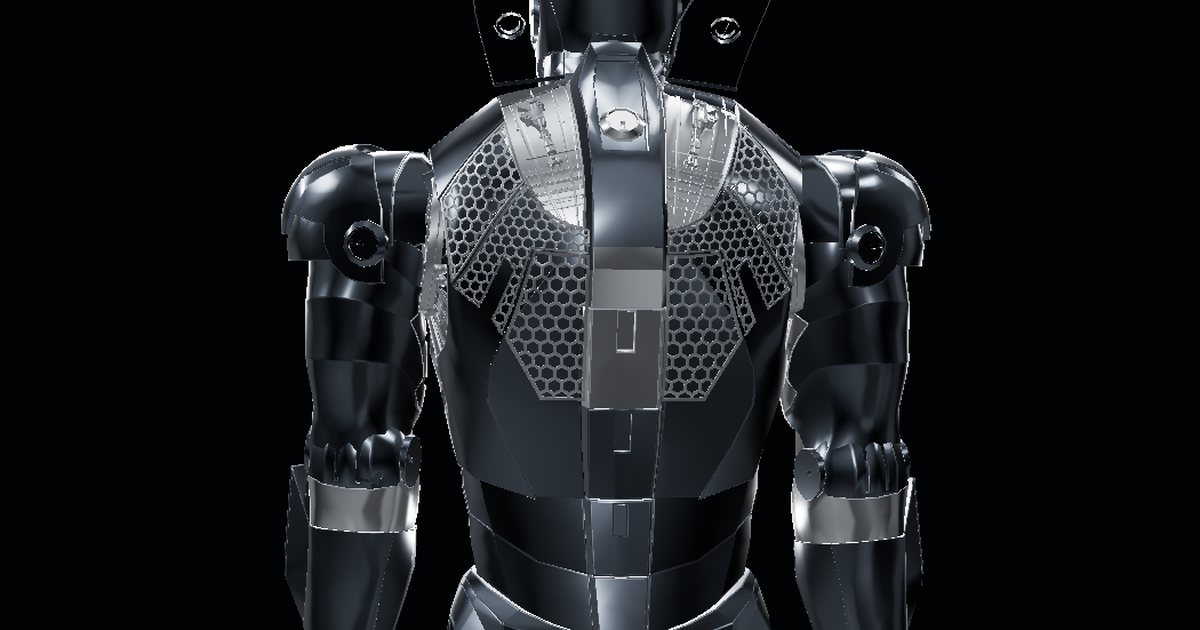
People already fly jet suits
This is the one part of the suit that is not speculation. Gravity Industries founder Richard Browning made the first flight in his jet suit in November 2016, and the suit has since flown at hundreds of events. According to the Institution of Mechanical Engineers, it uses five off-the-shelf gas turbines (two on each arm and one on the back) spinning at 120,000 rpm, burns Jet A-1 or diesel, weighs 27 kg dry, and is quoted at 1,050 to 1,500 bhp. In November 2019 Browning set the Guinness World Record for the fastest body-controlled jet engine powered suit at 85.06 mph (136.891 km/h).
A different machine, Franky Zapata's Flyboard Air, is a jet-powered platform the pilot stands on. On 4 August 2019 it crossed the English Channel, about 22 miles, in roughly 20 minutes with one refueling stop.
So the question is not whether a person can fly on body-worn jets. They can (the real Iron Man suits page lists every machine that does a piece of the job today). The question is how far that real capability is from what the films show, and what physics sets the gap.
Hover math: thrust must equal weight
To hover, the suit has to push air (or exhaust) downward hard enough to cancel its own weight. Thrust equals mass times gravity, 9.81 newtons for every kilogram of pilot, suit and fuel.
The reference engine is the JetCat P400-PRO, a commercial microturbine of the class that makes jet suits possible. JetCat lists 425 N of thrust from an engine weighing 4.01 kg, a thrust-to-weight ratio of 425 ÷ (4.01 × 9.81) ≈ 11. It moves 0.67 kg of air per second, exhausts it at 2,122 km/h, and has a specific fuel consumption of 0.157 kg per newton of thrust per hour at full power. That last figure lets us turn any thrust into a fuel burn. Jet fuel's density is specified at 775 to 840 kg per cubic metre, so the litres below use 0.8 kg per litre.
| Takeoff mass (pilot, suit, fuel) | Thrust to hover | P400-class engines, no margin | Fuel burn at hover |
|---|---|---|---|
| 120 kg (a light jet suit) | 1,177 N | 2.8 | 3.1 kg/min (3.9 L/min) |
| 150 kg | 1,472 N | 3.5 | 3.9 kg/min (4.8 L/min) |
| 300 kg | 2,943 N | 6.9 | 7.7 kg/min (9.6 L/min) |
| 700 kg (heavily armored) | 6,867 N | 16.2 | 18 kg/min (22.5 L/min) |
Hovering is not enough: climbing and maneuvering need spare thrust on top of these numbers. And a heavy armored suit, the kind that could stop bullets (see the armor guide), multiplies everything.
The real suit checks out against this table. The American Society of Mechanical Engineers reports that Gravity's turbines burn about 4 litres of jet fuel per minute. At 0.8 kg per litre that is 192 kg an hour, and at JetCat-class efficiency (192 ÷ 0.157) it corresponds to roughly 1,200 N of thrust, enough to hold up about 125 kg. That is what a 27 kg suit, a pilot and a tank of fuel weigh.
Fuel burn and endurance: the hover equation
Here is the most important idea on this page. A hovering jet suit burns fuel in proportion to its weight, and every kilogram of fuel it burns makes it lighter. That gives a clean equation:
- Fuel flow = specific fuel consumption × thrust = SFC × mass × g.
- So the mass falls exponentially, with a time constant τ = 1 ÷ (SFC × g).
- With SFC = 0.157 kg/(N·h) = 4.36 × 10⁻⁵ kg/(N·s), τ = 1 ÷ (4.36 × 10⁻⁵ × 9.81) ≈ 2,340 s, or 39 minutes.
- Hover time = τ × ln(takeoff mass ÷ landing mass).
To run these numbers for your own weight and a suit of your choice, use the Iron Man suit flight calculator.
The striking part is that the size of the suit cancels out. Endurance depends only on how efficient the engine is and what fraction of the takeoff mass is fuel:
| Fuel as share of takeoff mass | Maximum hover time |
|---|---|
| 10% | 4.1 minutes |
| 20% | 8.7 minutes |
| 30% | 13.9 minutes |
| 50% | 27 minutes |
Check it against reality. ASME puts Gravity's typical fuel load at 40 litres, about 32 kg. With a 27 kg suit and an 80 kg pilot (our assumption), fuel is 23% of a 139 kg takeoff mass, so the ceiling is 39 × ln(139 ÷ 107) ≈ 10 minutes. IMechE quotes a flight time of 5 to 10 minutes, with 4 minutes as the longest recorded flight. Real flights stop short of the ceiling because pilots keep a reserve and engines burn more fuel per newton at part throttle. Zapata's Channel crossing needed a refueling stop for the same reason: two hops averaging about ten minutes each.
Now ask for an hour. ln(m₀ ÷ m₁) = 60 ÷ 39 means the takeoff mass must be 4.7 times the landing mass: 79% of the suit at takeoff would have to be fuel. No wearable design gets near that, which is why every real jet suit flies for minutes. In the films the suit carries no fuel at all; the arc reactor is the invention that deletes this equation.
Why not electric?
If fuel is the limit, why not batteries and electric fans? Because of a second piece of physics: the power in a jet is half the thrust times the exhaust speed (P = ½ × T × v). For the same thrust, a slow, wide jet takes far less power than a fast, narrow one.
- Fast and narrow. At the JetCat's exhaust speed of 589 m/s, hovering 150 kg takes ½ × 1,472 N × 589 m/s ≈ 434 kW of jet power.
- Slow and wide. At 100 m/s it takes ½ × 1,472 × 100 ≈ 74 kW, but the exhaust area has to grow to T ÷ (ρ × v²) = 1,472 ÷ (1.225 × 100²) ≈ 0.12 m², about four ducted fans 20 cm across.
Amprius rates its newest SiCore 500 cells at 500 Wh/kg, near the top of what rechargeable batteries offer. A 10 kg pack holds 18 MJ, which at 74 kW lasts about 245 seconds (four minutes) before counting motor and fan losses. Electric lift is possible, but with bulky fans and the same minutes-long endurance. The suit as drawn, with small nozzles in its boots and palms, needs a fast jet and therefore hundreds of kilowatts, which only a fuel or a reactor can supply.
Stability and control: balancing on jets
A jet suit is a person balancing on columns of hot gas, and staying upright is a control problem before it is a power problem.
Gravity's answer is the pilot. IMechE describes the pilot's arms as the main balance and direction control, with the body acting as the flight control structure and the brain as the gyro and the engine control unit. ASME notes the thrust is split roughly one third to each arm and one third to the backpack, like a camera tripod. Browning found hovering became much easier after moving the arm turbines up the arms, away from the fists. In other words, the stabilizer is a trained human, constantly adjusting.
The suit in the films puts most of its thrust in the boots, far below the center of mass, and that is much less forgiving. Here is how fast a small error grows:
- Say the boots carry 1,100 N and are misaligned by just 1 degree, with a lever arm of about 1 m from the soles to the center of mass.
- The tipping torque is 1,100 × sin(1°) × 1 m ≈ 19 N·m.
- Model a 150 kg, 1.8 m tall pilot-plus-suit as a rod: moment of inertia = m × L² ÷ 12 ≈ 40.5 kg·m².
- Angular acceleration is 19 ÷ 40.5 ≈ 0.47 rad/s². Uncorrected, the suit tips about 14 degrees in the first second and 54 degrees by the end of the second.
So a boot-thrust suit needs active stabilization correcting many times a second: gimbaled boot nozzles, palm thrusters held out on long lever arms (which is exactly the pose the films show), small reaction-control jets, and a flight computer reading inertial sensors. The HUD and sensors guide covers that loop. Unlike the power problem, this one is solved engineering in drones and landing rockets.
There is also the exhaust. JetCat lists its exhaust gas at 480 to 750 °C. Boot nozzles put that centimeters from the pilot's feet, which is a job for thermal barrier coatings and the cooling system.
Speed and drag: what going fast costs
Drag grows with the square of speed: D = ½ × ρ × v² × Cd × A, where ρ is air density (1.225 kg/m³ at sea level) and Cd × A is the body's drag area. NASA's terminal velocity equation lets us measure that area from skydivers. The United States Parachute Association says skydivers fall at about 120 mph (53.6 m/s). At that speed drag equals weight, so for a 90 kg skydiver with gear, Cd × A = 2 × 90 × 9.81 ÷ (1.225 × 53.6²) ≈ 0.5 m² lying flat. A suit flying head-first in a tight, streamlined pose could do much better; take a quarter of that, 0.125 m², as an optimistic figure.
| Speed | Drag, belly-flat (0.5 m²) | Drag, streamlined (0.125 m²) | Thrust power, streamlined |
|---|---|---|---|
| 137 km/h (85 mph, the jet suit record) | 443 N | 111 N | About 4 kW |
| 500 km/h | 5,909 N | 1,477 N | About 205 kW |
| 1,225 km/h (speed of sound at sea level) | 35,500 N | 8,870 N | About 3.0 MW |
The speed of sound at sea level comes from √(1.4 × 287 × 288 K) ≈ 340 m/s. Drag also climbs steeply as a body nears that speed, so treat the last row as a floor.
At the record speed, drag is only about 110 to 440 N, yet that is already hard work for a jet suit. Most of its roughly 1,200 N of thrust is busy holding the pilot up, and only the thrust left over after supporting the weight can be leaned forward to fight drag. A jet suit's top speed is set by that margin. The supersonic flight shown in the films is another matter (the speed guide works through Mach 3 and Mach 5, heat included). Even streamlined, 8,870 N is about 21 P400-class engines (84 kg of turbines), and at their static fuel rate they would burn about 23 kg of fuel a minute, before supporting the suit's weight at all.
The pilot is the hardest limit
Suppose the thrust and fuel problems were solved. The human inside still has to survive the flying. Acceleration in a turn is v² ÷ r:
- A turn at 300 m/s (about 1,080 km/h) on a 500 m radius is 300² ÷ 500 = 180 m/s², about 18 g.
- Stopping from 300 m/s in 3 seconds averages 100 m/s², about 10 g.
The FAA notes that pilots of military fighter jets and aerobatic aircraft face forces as high as 9 g, and that rapid onset of g can cause grey-out, blackout and loss of consciousness. Holding 9 g at 300 m/s takes a turn radius of at least 300² ÷ (9 × 9.81) ≈ 1,020 m. The tight, violent maneuvers in the films sit well beyond what a human body tolerates, and no armor can change that, because it is the pilot's own blood being pulled away from the brain. Life support covers what a suit can and cannot do for the wearer.
The films against the best real technology
| Iron Man (in the films) | Best real today | |
|---|---|---|
| Lift source | Boot and palm thrusters fed by the arc reactor | Five kerosene microturbines (Gravity) |
| Thrust | Not stated | 425 N per P400-class engine; about 1,200 N for Gravity's suit, estimated from its fuel burn |
| Fuel | None | About 4 L of jet fuel per minute |
| Endurance | Long-distance flights between continents | 4 minutes longest recorded and 5 to 10 quoted (Gravity); about 20 minutes with a refuel stop (Flyboard Air) |
| Top speed | Keeps pace with fighter jets | 85.06 mph (136.9 km/h), the Guinness record; Flying magazine reported up to 110 mph on the Flyboard Air's Channel crossing |
| Suit mass | Heavy armor | 27 kg dry (Gravity) |
| Stabilization | Flight computer | The pilot's arms and balance |
| Sustained g in flight | Violent maneuvers | Up to about 9 g in fighter jets |
The verdict
- Hover: real, and flying since 2016. Microturbines of the JetCat class, with engine thrust-to-weight near 11, hold up a person.
- Endurance: minutes, and physics says so. The hover equation's 39-minute time constant means an hour aloft would take a suit that is 79% fuel.
- Speed: tens of miles per hour today. Supersonic flight at sea level takes at least 8,900 N and 3 MW of thrust power, roughly 21 turbines.
- Control: solvable. A flight computer and vectored thrust can balance a boot-thrust suit, as drones and landing rockets already show.
- The pilot: not solvable. The maneuvers in the films exceed human g tolerance by a wide margin.
So the suit could fly, in the way a real jet suit flies: a few minutes, below 100 mph, with a skilled pilot or a good flight computer. Everything beyond that depends on the arc reactor, and on a pilot who does not black out. Explore the boot and palm thrusters in the 3D teardown, or browse the other engineering guides.
FAQ
Can a jet suit really fly?
Yes. Gravity Industries' suit has flown since 2016 on five small gas turbines, two on each arm and one on the back, and it holds the Guinness record for a body-controlled jet suit at 85.06 mph.
How long can a real jet suit fly?
A few minutes. Gravity quotes 5 to 10 minutes, with 4 minutes the longest recorded flight. Because a hovering suit burns fuel in proportion to its weight, an hour would require about 79% of the takeoff mass to be fuel.
How much thrust would an Iron Man suit need?
9.81 N per kilogram just to hover, plus margin to climb. A 150 kg suit and pilot needs about 1,470 N; a 700 kg armored suit needs about 6,870 N, roughly sixteen commercial microturbines.
Could the Iron Man suit go supersonic?
Not on any real engine you could wear. Even a streamlined body needs about 8,900 N of thrust and 3 MW of thrust power at the speed of sound at sea level, and the pilot would still face the g-forces of maneuvering.
Why do real jet suits put engines on the arms?
Because the pilot steers with them. Moving the arms vectors the thrust, so a trained pilot balances the suit by feel, much as you balance on a bicycle. Gravity found hovering got easier when the arm turbines moved up the arms, away from the fists.
Why not use electric fans instead of jet engines?
Electric lift needs large, slow fans to keep power down. A 150 kg hover takes about 74 kW through fans totaling 0.12 m², so a 10 kg pack of the best cells lasts about four minutes before losses.