Is there a real Iron Man suit?
Updated 2026-11-23 · 15 min read
Short answer
Not a complete one. Each major part exists as a separate machine: Gravity Industries' jet suit flies at up to 85 mph, powered exoskeletons multiply strength, the F-35 helmet is a working HUD and NASA's spacesuit keeps a person alive for hours. The one program that tried to combine them, the US military's TALOS suit, was cancelled in 2019.
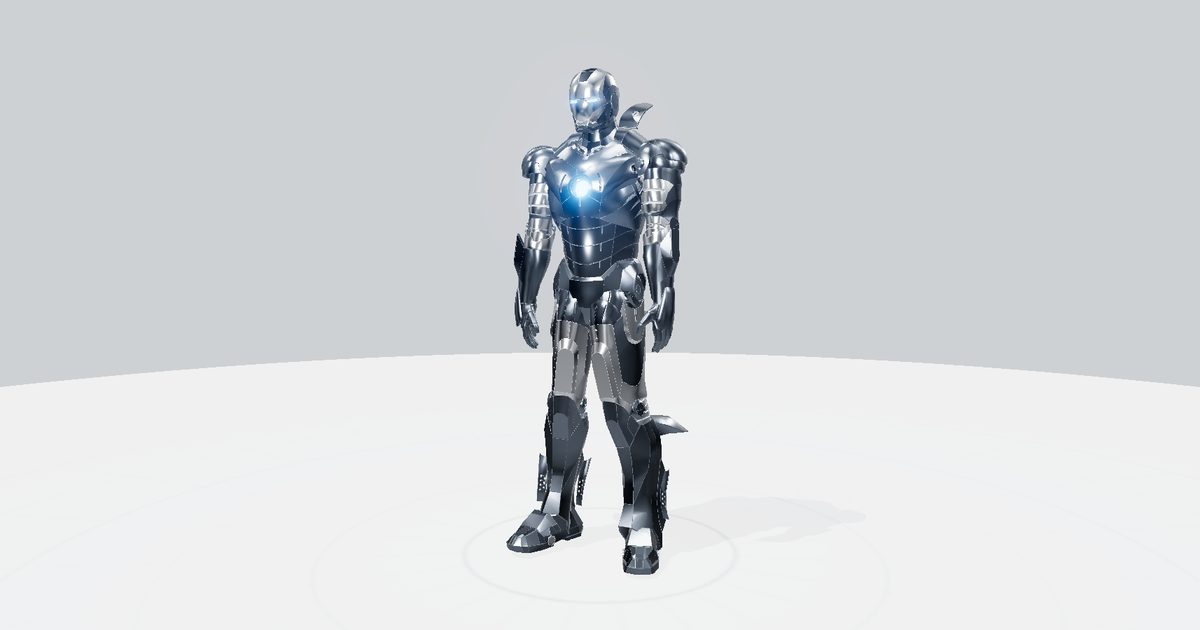
The short answer
No one has built a complete Iron Man suit. What does exist, as of November 2026, is a set of real machines that each do one job of the suit: jet suits that fly, powered exoskeletons that add strength, a fighter helmet that works as a heads-up display, and spacesuits that keep a person alive in vacuum. None has been combined with the others, and the one serious attempt to build an armored, powered suit, the US military's TALOS program, was cancelled in 2019.
Below is each machine and where it stands today, then why nobody has put them together. The whole-suit verdict is on the engineering hub.
Jet suits: the flying part is real
The closest thing to Iron Man in the air is the Gravity Industries Jet Suit. Founder Richard Browning made its first off-ground flight in November 2016, and the company says it has since flown more than 300 events worldwide. According to the Institution of Mechanical Engineers, the suit flies on five small gas turbines, two on each arm and one on the back, weighs 27 kg dry and is quoted at 1,050 to 1,500 bhp. On 14 November 2019 at Brighton, Browning set the Guinness World Record for the fastest body-controlled jet engine powered suit at 85.06 mph (136.891 km/h).
The numbers for real missions are smaller. Gravity's own defence and security specification lists a flight time of about 3 minutes, a top speed of 60 mph and a startup under 20 seconds. In 2019 ASME reported that Gravity sold its suits for $443,000 and had sold two, and that the turbines burn about 4 litres of jet fuel a minute. The flight guide shows why that fuel burn holds every jet suit to minutes in the air.
What it has been tested for:
- Ship boarding. In May 2021 the patrol ship HMS Tamar and Royal Marines of 42 and 47 Commando worked with Gravity in Plymouth Sound. The Royal Navy found the suit impressive but concluded it was not yet ready for military adoption. Gravity later flew boarding exercises with British and Dutch forces and a NATO mountain rescue exercise in Slovenia, FLYING magazine reported.
- Border mobility. In January 2023 India's Ministry of Defence sought bids for 44 jetpacks weighing no more than 40 kg that could carry an 80 kg soldier at 50 km/h or more, and Browning demonstrated the Gravity suit at the Army Airborne Training School in Agra.
- Mountain rescue. In September 2020, for the Great North Air Ambulance Service, Browning reached a simulated casualty in the Lake District in 90 seconds, against about 25 minutes of climbing on foot. A 2022 paramedic trial with Ørsted was described as early-stage, not an operating service.
The suit is still flying: on 7 November 2026 Browning flew it at NASA's MAX POWER expo at Kennedy Space Center.
Flyboard Air, JetPack Aviation and the other flyers
Franky Zapata's Flyboard Air is a jet-powered platform the pilot stands on and steers by leaning, so it matches the suit's flight but not its form. It holds the Guinness record for the farthest flight by hoverboard, 2,252.4 m, set in April 2016. On 14 July 2019 an armed Zapata flew it over the Bastille Day military parade in Paris; he had received a €1.3 million development grant. On 4 August he crossed the English Channel, about 22 miles, in roughly 20 minutes with one refueling stop.
JetPack Aviation, in California, builds a true backpack. IEEE Spectrum reported in 2015 that its JB-9 flew on two small turbojets, burned just under 4 litres of fuel a minute from a 38-litre tank, and could stay up at least 10 minutes at about 100 km/h. In September 2021 the company announced its first orders: two JB12 jetpacks for an undisclosed military customer in Southeast Asia, for $800,000. The JB12 weighs 48 kg, flies on six turbojets of about 0.39 kN each (about 2.3 kN in all) and is rated at up to 120 mph.
In November 2025 the JetRob team at Zhejiang University's Huzhou Institute demonstrated a five-engine jet suit laid out like Gravity's. It weighs 31 kg unfueled and 46 kg fueled, flies for three to five minutes, and has a theoretical top speed of 100 km/h.
The pattern is the same everywhere: kerosene turbines, tens of kilograms, minutes in the air.
Powered exoskeletons: the strength part
The suit's second job is moving with its wearer and multiplying their strength. That machine exists too, but the full-body version has had a hard few years.
Sarcos Guardian XO: the best full-body suit, now shelved
The most Iron Man-like exoskeleton yet built is the Sarcos Guardian XO. As IEEE Spectrum reported in December 2019, it was a fully electric, full-body suit weighing 150 lb (68 kg) that let its wearer lift 200 lb (90 kg) while feeling about 10 lb (4.5 kg). It drew about 500 W and was offered at about $100,000 a year.
It never reached the market at scale. Sarcos's annual report for 2023 records that in July 2023 it narrowed its focus to products that left out the Guardian XO, and that on 14 November 2023 it suspended commercialization of all its hardware to concentrate on AI software, citing its "failure to properly estimate the time and expense required to commercialize our hardware-centric industrial robotics solutions." In March 2024 the company renamed itself Palladyne AI.
Medical exoskeletons: the ones that sell
Medicine is where powered exoskeletons are real businesses. Ekso Bionics' EksoNR, about 55 lb with batteries, is FDA-cleared for rehabilitation after stroke, acquired brain injury, multiple sclerosis and spinal cord injury. In October 2026 the French company Wandercraft acquired Ekso Bionics, bringing their devices together in more than 700 rehabilitation and research centers.
The most film-like trick belongs to KAIST in South Korea. Its WalkON Suit F1 walks to its paraplegic user on its own and keeps its balance so the user can step into it from a wheelchair, a small echo of the armor that flies onto Tony Stark. It won gold at Cybathlon 2024.
Industrial, consumer and military exoskeletons: partial help, on sale
- Hyundai and Kia's X-ble Shoulder has no motor and no battery. A torque mechanism supports the arms during overhead work, cutting shoulder joint load by up to 60%, by Hyundai's figures. The first unit went to Korean Air in July 2025.
- German Bionic's Exia, launched in May 2025, is a powered lifting exoskeleton that gives up to 38 kg of lift support per movement.
- Consumer exoskeletons went on sale in 2025. Hypershell's X Series launched globally at €899 with an 800 W motor in about 2.4 kg. At Mount Tai in China, tourists began renting a 1.8 kg powered leg exoskeleton for 60 to 80 yuan a climb.
- Armies are adopting them for logistics. Defense One reported in August 2025 that China's People's Liberation Army uses a powered suit that adds about 44 lb (20 kg) of lift and that testers say lets one soldier carry a 110 lb (50 kg) ammunition box.
None of them is armored, flies, or carries a hundred kilograms of plate. The exoskeleton guide covers how they read the wearer's intent and what they cost in watts.
TALOS: the military's Iron Man suit, and why it was cancelled
The only serious attempt to build the whole thing was US Special Operations Command's Tactical Assault Light Operator Suit, TALOS, introduced in 2013 and widely called the Iron Man suit: ballistic armor, an exoskeleton, built-in displays and its own power in one suit for special operations troops.
The numbers went wrong early. In 2014 the program's leaders told Defense Media Network that they wanted the suit under 400 lb (181 kg) and were then above it, with a power supply on the operator's back that would run for 12 hours, which one official compared to carrying two and a half small hardware-store generators.
In February 2019 SOCOM told Task & Purpose there was "no intent to field" the Mk 5 prototype. After at least $80 million over five years, the program had missed its deadline because of "complex subsystem interdependencies", the prototype was "not currently suitable for operation in a close combat environment", and the full-body exoskeleton was "not mature enough for SOF needs". As one SOCOM acquisition officer put it: "It's not the Iron Man."
The parts survived. Breaking Defense reported that new body armor from the program covered about 44% of the body, against about 19% for standard plates, at no extra weight, and that a shirt that monitors and cools its wearer drew interest from Special Forces. The suit failed as a whole, not part by part; the armor guide shows why full coverage costs so much weight.
The F-35 helmet: the closest real HUD
The suit's display already flies, inside the F-35's Gen III Helmet Mounted Display System. Collins Aerospace lists a 30 by 40 degree binocular display with night vision projected onto the visor, and the pilot can aim weapons by looking at a target. It is fed by the jet's Distributed Aperture System, six electro-optical sensors that give a 360 degree, spherical view. Guinness World Records lists it as the most expensive augmented reality headset, at $400,000 a unit, with camera feeds that let the pilot see through the cockpit floor. In February 2024 its makers delivered the 3,000th.
Unlike the films, the helmet depends on the jet: its sensors, computers and power sit in the aircraft, not on the pilot. The HUD and sensors guide covers making it wearable.
Spacesuits: the closest real life support
For keeping a person alive in a sealed shell, the benchmark is NASA's Extravehicular Mobility Unit (EMU), worn outside the International Space Station. NASA's fact sheet puts the station version, with its life-support backpack and SAFER rescue pack, at about 145 kg on Earth, pressurized to 4.3 psi (29.6 kPa). The EMU first entered use in 1979, was upgraded in 2002, and supports a 7-hour spacewalk. In orbit, a suit has even flown free: on 7 February 1984 Bruce McCandless made the first untethered spacewalk on a nitrogen-propelled, hand-controlled backpack.
Replacing the EMU has proved hard. NASA's Inspector General reported in 2021 that astronauts were still using suits designed 45 years earlier, after NASA had spent about $420 million on spacesuit development since 2007. In April 2026 it found that the next-generation suits, under contracts worth up to $3.1 billion, were at least a year and a half behind schedule; Axiom Space was planning for demonstration readiness in late 2027, and at historical averages the demonstrations would slip to 2031. NASA's February 2026 Artemis overhaul made Artemis III a 2027 test in Earth orbit, where astronauts will try the new suits without going outside, and moved the Moon landing to Artemis IV in 2028.
A spacesuit solves air, pressure and the wearer's heat for hours, but it does not fly, stop bullets or add strength. The life support guide covers what a flying suit would need from it.
The real machines side by side
| Machine | Suit system it matches | Key spec | Status (November 2026) |
|---|---|---|---|
| Gravity Industries Jet Suit | Flight | 27 kg dry; 85.06 mph Guinness record | Flying: displays, military and rescue trials |
| Zapata Flyboard Air | Flight (a platform, not a suit) | 2,252.4 m Guinness record | Flown; military demonstrations |
| JetPack Aviation JB12 | Flight | 48 kg; six turbojets; up to 120 mph | Sold: two to a military customer in 2021 |
| JetRob jet suit (Zhejiang University) | Flight | 31 kg unfueled; 3 to 5 minutes | Flying prototype since 2025 |
| Sarcos Guardian XO | Motion and strength | 68 kg; 90 kg load feels like 4.5 kg | Shelved: hardware suspended in 2023 |
| EksoNR | Motion (medical) | FDA-cleared for stroke, brain and spinal cord injury, MS | Sold; part of Wandercraft since 2026 |
| Hyundai X-ble Shoulder | Motion (industrial) | Unpowered; up to 60% less shoulder load | Sold in Korea since July 2025 |
| German Bionic Exia | Motion (industrial) | Up to 38 kg of lift support | Sold since May 2025 |
| Hypershell X Series | Motion (consumer) | 800 W motor; about 2.4 kg | Sold since January 2025 |
| SOCOM TALOS | Armor, power, motion and HUD together | Above 400 lb in 2014; at least $80 million | Cancelled in 2019 |
| F-35 Gen III helmet | HUD and sensors | 30 by 40 degree display; $400,000 each | In service; 3,000 delivered by 2024 |
| NASA EMU | Life support | About 145 kg; 4.3 psi; 7-hour spacewalks | In service since 1979 |
| Axiom AxEMU | Life support | Next-generation Moon suit | In development; demonstration planned for late 2027 |
What nobody has combined, and why
Every system of the suit exists somewhere in 2026. They have never been put into one machine, for four reasons.
1. The weights add up. Each real machine is sized for its own job: Gravity's jet suit is 27 kg dry, the Guardian XO 68 kg and the station spacesuit about 145 kg, and rifle-rated armor over the whole body comes to about 100 kg (see the armor guide). Sharing parts trims some of that, but a rifle-proof suit still comes out at 170 to 200 kg empty and about 250 to 280 kg with its wearer. Hovering 280 kg takes 280 × 9.81 ≈ 2,750 N of thrust, more than double the roughly 1,200 N the flight guide estimates for Gravity's suit.
2. The power sources do not match. Gravity's turbines are quoted at 1,050 bhp, about 780 kW, from kerosene for a few minutes. The Guardian XO drew about 500 W from batteries for about two hours. That is a factor of more than 1,500 between the flying part and the walking part, and no wearable power source covers both. The arc reactor guide explains why nothing real fills the gap.
3. The heat has nowhere to go. Every watt ends up as heat inside a shell that must also be sealed, armored and worn. The EMU's cooling garment is sized for an average of 290 W, a person's output, not a machine's hundreds of kilowatts. The cooling guide does the numbers.
4. Integration is its own problem. TALOS is the evidence: its parts worked well enough to spin off, while the integrated suit missed its deadline because of "complex subsystem interdependencies". Every added system loads the others, and heat, weight and power draw all land on one shell.
Then there is the bill. The helmet alone is $400,000, a 2019 jet suit $443,000, and TALOS spent at least $80 million without fielding a suit. The cost guide adds up what one complete suit would take.
The verdict
- Flight: real. Gravity's jet suit has flown since 2016 and holds the 85.06 mph record; in service it flies about 3 minutes at up to 60 mph.
- Strength: real in parts. Medical, industrial and consumer exoskeletons are on sale; the best full-body suit, the Guardian XO, was shelved in 2023.
- Armor and the whole suit: attempted and cancelled. TALOS spent at least $80 million and ended in 2019.
- Display: in service. The F-35 helmet is a working HUD, at $400,000 each.
- Life support: in service and hard to replace. The EMU supports 7-hour spacewalks, and its successor is behind schedule.
- All of it at once: nobody. The weights add up, the power sources differ by a factor of more than 1,500, and the heat has nowhere to go.
So there are several real Iron Man suits, each doing one job, and none that does them all. See how the systems would fit into one shell in the 3D teardown, or read the whole-suit verdict on the engineering hub.
FAQ
Is there a real Iron Man suit in 2026?
Not a complete one. The closest real machines each do one job: Gravity Industries' jet suit flies, powered exoskeletons multiply strength, the F-35 helmet is a working HUD and NASA's spacesuit provides life support. No machine combines them.
Who has built the closest thing to an Iron Man suit?
For flight, Richard Browning of Gravity Industries, whose five-turbine jet suit holds the Guinness record at 85.06 mph. For an armored, powered suit, US Special Operations Command's TALOS came closest, and it was cancelled in 2019 without being fielded.
Can you buy a real Iron Man suit?
Not a complete one, but you can buy pieces. ASME reported in 2019 that Gravity sold its jet suits for $443,000, JetPack Aviation sold two jetpacks to a military customer for $800,000 in 2021, and consumer exoskeletons launched in 2025 at €899.
Did the US military build an Iron Man suit?
It tried. SOCOM's TALOS program spent at least $80 million and in 2019 said it had no intent to field the prototype: its subsystems would not integrate on schedule, its exoskeleton was immature and it was not suitable for close combat. Its armor and other parts lived on in other programs.
What happened to the Sarcos Guardian XO?
Sarcos dropped it from its priority products in July 2023, suspended all hardware commercialization that November to focus on AI software, and renamed itself Palladyne AI in March 2024. The suit, which let a wearer lift 90 kg as if it were 4.5 kg, is no longer being sold.
How fast and how long can a real Iron Man suit fly?
The record is 85.06 mph (136.9 km/h), set by Gravity's jet suit in 2019. In service, Gravity lists about 3 minutes of flight and a 60 mph top speed, because a hovering jet suit burns fuel in proportion to its weight.