Could the Iron Man suit fly to space?
Updated 2026-11-23 · 4 min read
Short answer
Not on jet engines: they burn oxygen from the air, which runs out long before space. A rocket-powered suit could make a short hop above 100 km carrying about its own weight in propellant, but reaching orbit takes a takeoff mass about 24 times the suit and wearer, 96% of it propellant, and coming back needs a heat shield like the Space Shuttle's, built for about 1,650 °C.
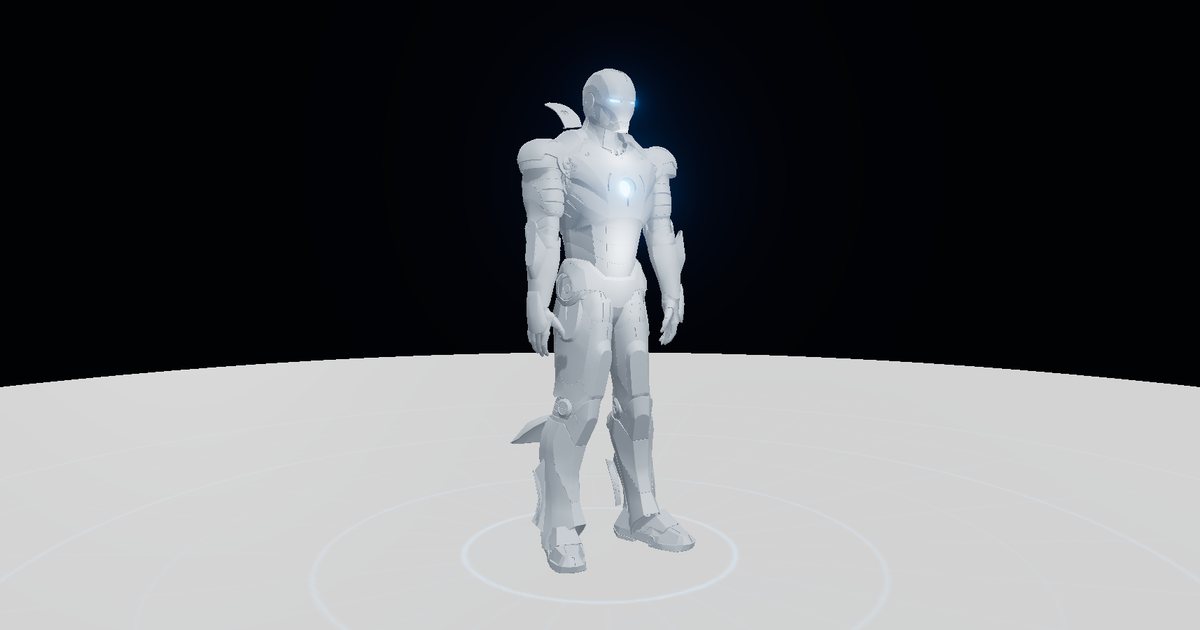
Jet engines run out of air
Every real jet suit flies on small kerosene jet engines ( flight guide). A jet engine carries only fuel; the oxygen to burn it comes from the air it swallows, about 15 kg of air for every kilogram of fuel. That works near the ground and stops working as the air thins. NASA's standard atmosphere puts the density at 30 km at about 0.018 kg/m³, less than 2% of sea level, and at 100 km, the conventional edge of space, there is effectively none.
So the suit as shown in the films, with jets in its boots and palms, could climb only as high as its engines can still breathe, well short of space. In Iron Man (2008) the Mark II never gets near: it ices up while chasing the SR-71's altitude record of about 85,000 feet (26 km).
To go higher, the suit has to carry its own oxygen as well as its fuel. That makes it a rocket.
The rocket equation
A rocket's speed change depends on its exhaust speed and on how much of its mass is propellant:
- Speed change = exhaust speed × ln(takeoff mass ÷ empty mass), the Tsiolkovsky rocket equation.
- A kerosene and liquid-oxygen engine has an exhaust speed of about 2,950 m/s (a specific impulse of about 300 seconds). Hydrogen and oxygen, the best common propellants, reach about 4,400 m/s.
Take a suit and wearer of 300 kg without propellant, close to the armored flying suit in the weight guide.
| Goal | Speed change needed | Takeoff mass (kerosene) | Propellant share |
|---|---|---|---|
| A hop to 100 km and back down | about 2 km/s | about 590 kg | about 49% |
| Orbit, about 400 km up | about 9.4 km/s | about 7,300 kg | about 96% |
| Orbit on hydrogen and oxygen | about 9.4 km/s | about 2,500 kg | about 88% |
The hop needs about 1.4 km/s in theory (the speed that coasts up to 100 km) plus losses to gravity and drag while the engine burns, which is why we use about 2 km/s. That is a suborbital flight like Blue Origin's New Shepard, and it would carry about its own weight in propellant.
Orbit is another matter. A spacecraft in low orbit moves at about 7.8 km/s, and climbing there through gravity and air costs about 9.4 km/s in total. On kerosene the suit would have to take off at about 24 times its empty mass. That is a rocket with a person on the tip, not a suit.
Coming back down
What goes up fast comes down fast. From orbit, the air slows a returning craft from 7.8 km/s and turns that speed into heat. The Space Shuttle's nose and wing edges were built from reinforced carbon-carbon to survive about 1,650 °C (3,000 °F). A suit returning from orbit would need the same: a heat shield or a capsule around it, not thin titanium plates. Even the short hop to 100 km comes back at more than 1 km/s, fast enough to need a parachute or rockets to land.
Staying alive up there
This is the part real technology already solves. NASA's spacewalk suit keeps a person alive for hours in vacuum: oxygen at 4.3 psi (29.6 kPa), carbon dioxide scrubbing and a cooling garment ( life support guide and cooling guide). In sunlight and shadow outside the Space Station, surfaces swing by more than 200 °C, which a spacesuit's insulating layers handle.
The verdict
The Iron Man suit could not fly to space as it is drawn, because its jets need air. Built as a rocket, a suit could make a short hop to space carrying about its own weight in propellant, the way small suborbital rockets do. Orbit would take a vehicle about 24 times heavier than the suit and a heat shield to come home. Of all the things the suit does, getting to space is the one where a capsule beats a suit by the widest margin.
The numbers behind this page
- Suit and wearer without propellant: 300 kg.
- Exhaust speed: 2,950 m/s for kerosene and oxygen (specific impulse about 300 s), 4,400 m/s for hydrogen and oxygen.
- Speed change: about 2 km/s for a hop to 100 km including losses; about 9.4 km/s to low orbit including gravity and drag losses.
- Takeoff mass = 300 kg × e^(speed change ÷ exhaust speed).