How would a real Iron Man suit move with its wearer?
Updated 2026-11-23 · 14 min read
Short answer
As a powered exoskeleton: sensors read the force or muscle signals of the wearer and an electric motor at each joint moves in step. The best real full-body example, the Sarcos Guardian XO, weighs 68 kg, makes a 90 kg load feel like 4.5 kg and draws about 500 W, or about two hours per kilowatt-hour of battery. The film suit's instant, full-range, all-day motion is still beyond any real machine.
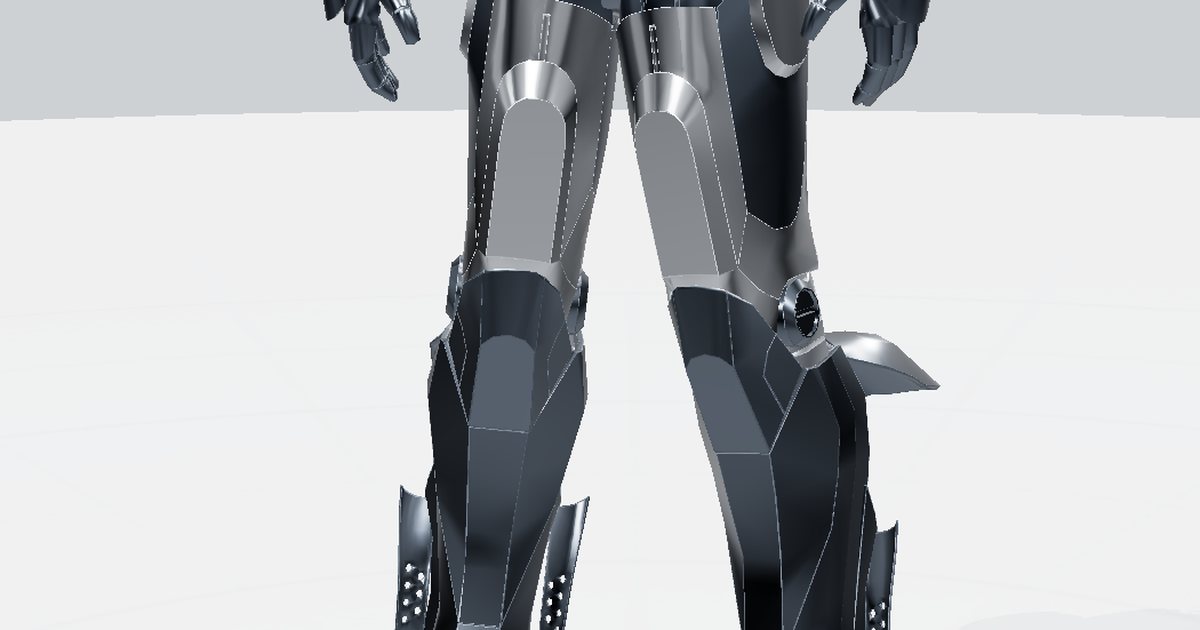
The short answer
A real suit would move the way today's powered exoskeletons do. Sensors measure what the wearer is trying to do, either the force their limbs push against the frame or the electrical activity in their muscles, and a computer drives an actuator at each joint so the frame moves with the body and carries the load to the ground. Every part of that loop exists today.
What does not exist is a version that matches the films: no lag, the body's full range of motion, the strength to throw cars and the power to do it all day. Below are the machines that exist, the actuators that move them, how they read intent, and what it all costs in watts. The plates the frame has to carry are in the armor guide, and every joint is mapped in the 3D teardown.
What the films and comics show
In the films, the suit is a second skin. There are no visible motors or pistons; Tony Stark runs, punches and lands in it as if it weighed nothing, and in Iron Man 3 the armor flies onto him piece by piece, homing on implants in his arms. The comics go further: in the Extremis storyline, Stark's own nervous system is rewired so that he controls the armor directly. Power never limits any of it, because the chest reactor in the films is credited with about 3 gigajoules per second (see the arc reactor guide).
Real machines have to earn each of those abilities separately: strength from actuators, smoothness from sensing and control, range of motion from joint design, and endurance from batteries.
Powered exoskeletons that exist today
Industrial: the closest thing to a real suit
The best-documented full-body powered exoskeleton is the Sarcos Guardian XO. As IEEE Spectrum reported in December 2019, it is a fully electric, 24-degree-of-freedom robot that weighs 150 lb (68 kg), carries its own weight, and lets the wearer lift 200 lb (90 kg) while feeling about 10 lb (4.5 kg). It uses force sensors to detect each motion the wearer makes and moves its own limbs in parallel. Walking at 3 mph with a 160 lb load it drew about 500 W, with a target of 425 W, from a pair of 12 lb, 500 Wh battery packs that last over two hours and can be hot-swapped. Peak joint torque was about 450 N·m, and the lease price about $100,000 a year.
Those figures imply three useful numbers:
- strength amplification: 90 kg ÷ 4.5 kg = 20 to 1
- runtime: 1,000 Wh ÷ 500 W = 2 hours
- battery pack energy density: 1,000 Wh ÷ 10.9 kg = about 92 Wh/kg
Military: the 'Iron Man suit' that was cancelled
US Special Operations Command's TALOS program set out to build an armored, powered combat suit, popularly called the Iron Man suit. According to Task & Purpose, it spent at least $80 million over five years, and in February 2019 SOCOM said there was "no intent to field" the Mk 5 prototype. It had missed its deadline because of "complex subsystem interdependencies", and the full-body exoskeleton was "not mature enough for SOF needs." A SOCOM acquisition officer put it plainly: "It's not the Iron Man." What survived were parts: lightweight polyethylene armor, a thermal management suit and stress monitoring, with pneumatic ankles and knees still maturing.
Medical: where exoskeletons already work
Medicine is where powered exoskeletons are real products. On June 26, 2014, the FDA granted the ReWalk a De Novo authorization that created the regulatory category of "powered exoskeleton" itself. Cyberdyne's HAL lower-limb system goes a step closer to the films: its skin sensors detect faint bioelectrical signals that reflect the wearer's intention to move. Its double-leg medical models weigh about 9.5 to 14 kg with batteries, run for about an hour, and two of them carry FDA 510(k) clearance.
Soft exosuits: small help, measured honestly
The best-measured results come from light, partial-assist suits. A Harvard team reported in Science in 2019 that a hip exosuit cut the metabolic cost of walking at 1.5 m/s by 9.3% and of running at 2.5 m/s by 4.0%, equal to taking 7.4 kg and 5.7 kg off the wearer. A Stanford team reported in Nature in 2022 that an ankle exoskeleton tuned during one hour of everyday walking raised walking speed by 9% and cut the energy used per distance by 17%. These are real gains, and they are measured in single-digit to tens of percent, not multiples.
The actuators: what actually moves the joints
Electric motors and strain-wave gears
The Guardian XO, like most modern robots, uses small, fast electric motors driving the joint through a high-ratio gearbox. The common choice is a strain-wave gear, which its maker Harmonic Drive says has "zero backlash" and an "extremely high reduction ratio in a very compact and lightweight package", where a single planetary stage reaches only up to 10:1. Zero backlash matters on a body: any play in a joint is felt as slop and delay. The trend is clear. Boston Dynamics retired its hydraulic Atlas and replaced it with a fully electric one that it says is "stronger, with a broader range of motion" than any previous version.
Hydraulics
Hydraulic cylinders pack enormous force into a small volume, which is why Boston Dynamics' original Atlas used them. The price is a pump, hoses, noise, heat and the risk of leaking high-pressure fluid next to a person. In a suit they still make sense in one place: sealed dampers that absorb landing loads, covered below.
Artificial muscles
Several soft actuators now behave like muscle in at least one way:
- Electrohydraulic (HASEL) actuators from the University of Colorado Boulder, reported in Science Robotics in 2018, contract by up to 10%, at strain rates of 900% per second, at 50 Hz, and lift more than 200 times their own weight.
- Twisted polymer fibers, made from fishing line and sewing thread by a team led from the University of Texas at Dallas, contract by up to 49%, lift loads more than 100 times heavier than human muscle of the same length and weight, and deliver 5.3 kW of mechanical work per kilogram ( Science, 2014). They are driven by heat, so their speed is set by how fast they cool.
- Pneumatic muscles need a compressed-air supply, and TALOS's pneumatic ankles and knees were still maturing when that program ended.
None of these is yet a drop-in replacement for a motor at a load-bearing joint, but they are the closest real thing to the films' motorless motion.
Shape-memory alloys
Nitinol wire shrinks when heated and is often proposed as silent artificial muscle. The manufacturer data from Dynalloy's Flexinol shows the catch. For long life the wire should see no more than 172 MPa and 2 to 6% strain; push harder and good motion lasts only "hundreds or a few thousand of cycles". A 0.25 mm wire pulls 891 g, draws 1,050 mA for a one-second contraction, has a resistance of 18.5 ohms per meter and takes 4.5 to 5.4 seconds to cool.
Size a bundle of 1 m wires to lift a 90 kg load (883 N):
- wires needed: 883 N ÷ (0.891 kg × 9.81 m/s²) = 883 ÷ 8.74 = 101 wires
- heating energy: (1.05 A)² × 18.5 ohms × 1 s = 20.4 J per wire, so about 2,060 J for the bundle
- work done: 883 N × 0.04 m (4% of 1 m) = 35 J
- efficiency: 35 ÷ 2,060 = about 1.7%, followed by a five-second wait to cool
About 98% of the energy becomes heat inside the suit, which is the problem the cooling guide is about. Nitinol suits small, slow jobs like latches and vents, not legs.
Reading intent: force sensors and muscle signals
There are two ways for a suit to know what its wearer wants.
The first is to feel it. The Guardian XO measures the force the wearer applies against the frame and moves to cancel it. This is robust, but it can only react after the wearer has started to push.
The second is to read the muscles. When a muscle is told to contract, its electrical activity (the electromyogram, or EMG) appears before the force does. A 2014 study in Frontiers in Physiology measured that gap in the quadriceps at 49.7 ± 7.0 ms from EMG onset to force onset. In principle, a suit reading EMG has a 50 ms head start.
In practice, the decoder spends it. A controller has to collect a window of signal before it can classify it, and that window adds delay. In a 2007 IEEE study of myoelectric prosthesis control, Farrell and Weir found the optimal controller delay was about 100 ms for fast prehensors and 125 ms for slower ones. If the decoder takes that long, the suit acts about 50 to 75 ms after the wearer's own muscle does, not before it. At a walking speed of 1.5 m/s, 100 ms is 15 cm of travel. The films' suit that moves exactly as Stark thinks remains fiction.
Strength amplification and its limits
A 20 to 1 ratio sounds like superhuman strength, and in one sense it is. But the physics puts limits on where that strength can go.
- Torque: holding 90 kg at arm's length, about 0.6 m from the shoulder, needs 90 × 9.81 × 0.6 = 530 N·m. That is more than the Guardian XO's 450 N·m peak, so even the best real suit has to keep heavy loads close to its body. What that means for lifting a car is worked out in how strong a real suit would be.
- Power: raising 90 kg at 1 m/s takes 90 × 9.81 × 1 = 883 W of mechanical power, more than the XO's whole 500 W walking budget. Heavy lifts are either slow or drain the batteries in bursts.
- Load path: the frame, not the wearer, has to carry the load from the hands to the ground. A suit that amplified the arms but routed the load through the wearer's spine and knees would injure them.
In the films the suit lifts cars and trades blows with the Hulk. A real suit could move a car-sized load only slowly, close to its body, with its own legs taking the weight.
Range of motion: the hardest part to copy
A frame has to follow every joint without blocking it. Reference values from the CDC's Normal Joint Range of Motion Study, adults aged 20 to 44:
| Motion | Men | Women |
|---|---|---|
| Shoulder flexion | 168.8° | 172.0° |
| Elbow flexion | 144.6° | 150.0° |
| Forearm pronation / supination | 76.9° / 85.0° | 82.0° / 90.6° |
| Hip flexion / extension | 130.4° / 17.4° | 133.8° / 18.1° |
| Knee flexion | 137.7° | 141.9° |
| Ankle dorsiflexion / plantarflexion | 12.7° / 54.6° | 13.8° / 62.1° |
Count the degrees of freedom: each arm has three at the shoulder, one at the elbow, one for forearm rotation and two at the wrist, which is seven. Each leg has three at the hip, one at the knee and two at the ankle, which is six. That makes 26 for the four limbs alone, before the spine, shoulder blades and hands. The Guardian XO has 24 in total.
Human joints are also not clean hinges. The knee rolls and slides as it bends, and the shoulder includes a shoulder blade that glides over the ribs. A frame joint whose axis does not track the body's pushes and chafes with every step. The armor adds its own limit: plates have to overlap in sliding segments to clear these angles, which the armor guide covers.
Power: what moving costs
At the Guardian XO's 500 W, a full 8-hour shift needs 8 × 500 = 4,000 Wh. At its pack-level 92 Wh/kg, that is 4,000 ÷ 92 = about 43 kg of batteries, which is why it swaps packs instead. A suit that also carries 100 kg of armor needs more.
Almost all of that power ends up as heat inside the suit, on top of the wearer's own body heat. The cooling guide and the article The real enemy is heat show why that matters more than the battery.
Landings: where the frame takes the hit
The superhero landing is the exoskeleton's worst moment. Drop from 20 m and the suit arrives at v = √(2 × 9.81 × 20) = 19.8 m/s. Stopping that over 0.3 m of knee bend and shock-absorber travel means a deceleration of v² ÷ (2d) = 392 ÷ 0.6 = 654 m/s², about 67 g. For a 280 kg suit and wearer that is ½ × 280 × 392 = about 55 kJ for the dampers to absorb.
Hydraulic dampers can absorb that energy. They cannot change the deceleration the wearer feels, because the body stops with the suit. 67 g is already at the edge of what restrained people have survived (see the life-support guide), so a real suit lands softly or uses its thrusters to brake ( flight guide).
The fiction against the best real technology
| In the films | Best real technology today | Real figure | |
|---|---|---|---|
| Strength | Lifts cars, fights the Hulk | Sarcos Guardian XO | 90 kg load felt as 4.5 kg (20 to 1) |
| Suit's own weight | Moves as if weightless | Guardian XO | 68 kg, carries itself |
| Joint torque | Effortless | Guardian XO peak | About 450 N·m |
| Endurance | Days on one chest reactor | XO battery packs | Over 2 hours per 1 kWh, about 500 W |
| Response | Instant, as fast as thought | EMG lead versus decoder delay | About 50 ms lead, 100 to 125 ms optimal decoder delay |
| Intent sensing | Direct nerve link (Extremis comics) | HAL bioelectrical sensors | Medical use, about 1 hour per charge |
| Range of motion | Every human movement | 24-DOF frame | Human limbs alone need about 26 DOF |
| Artificial muscle | No visible motors | HASEL, twisted fibers, nitinol | 10% to 49% contraction; nitinol about 1.7% efficient |
The verdict
A suit that moves with its wearer is real engineering, not fiction. Full-body electric exoskeletons have carried 90 kg loads at 20 to 1 amplification, medical exoskeletons read the body's own electrical signals, and soft exosuits measurably cut the energy of walking. Every element of the film suit's motion has a working counterpart.
What stays fictional is the combination. Real suits lag their wearers by tens of milliseconds, cover fewer degrees of freedom than the body has, run for hours rather than days, and turn most of their power into heat. And no frame protects the person inside from the deceleration of a hard landing. A real suit would be a strong, careful, slightly late companion rather than a second skin. The rest of the machine is covered on the engineering hub.
FAQ
Do real Iron Man exoskeletons exist?
Powered exoskeletons do. The Sarcos Guardian XO is a full-body electric suit that let a wearer lift 90 kg, and medical systems like ReWalk and HAL help people walk. None is armored or flies; the military's TALOS armored suit was cancelled in 2019.
How much stronger can an exoskeleton make you?
The Guardian XO's 2019 figures are 20 to 1: a 90 kg load felt like 4.5 kg. Torque and power still limit it, with about 450 N·m at the strongest joint and about 500 W from its batteries.
Can an exoskeleton read your mind?
Not your thoughts, but your muscles. EMG sensors on the skin pick up a muscle's electrical activity about 50 ms before it produces force, and Cyberdyne's HAL uses those bioelectrical signals. Decoding them takes about 100 ms, so the suit still trails slightly.
Why did the military's Iron Man suit fail?
SOCOM's TALOS spent at least $80 million over five years. Its prototype was not suitable for close combat and its full-body exoskeleton was not mature enough, so in 2019 SOCOM chose not to field it and kept the useful parts.
How long can a powered exoskeleton run?
The Guardian XO drew about 500 W and ran just over two hours on two 500 Wh packs. HAL's medical models run about an hour. A full 8-hour shift at 500 W would need about 43 kg of comparable batteries.