Engineering
Could the Iron Man suit be built for real?
Short answer
Pieces of it, yes, and several already exist: jet suits fly, exoskeletons multiply strength, fighter helmets project a HUD and spacesuits keep a person breathing. The whole suit, no. Three walls stop it: no power source comes within orders of magnitude of the arc reactor, a body-sized shell cannot shed the heat that power would make, and no human survives the g-forces the films show.
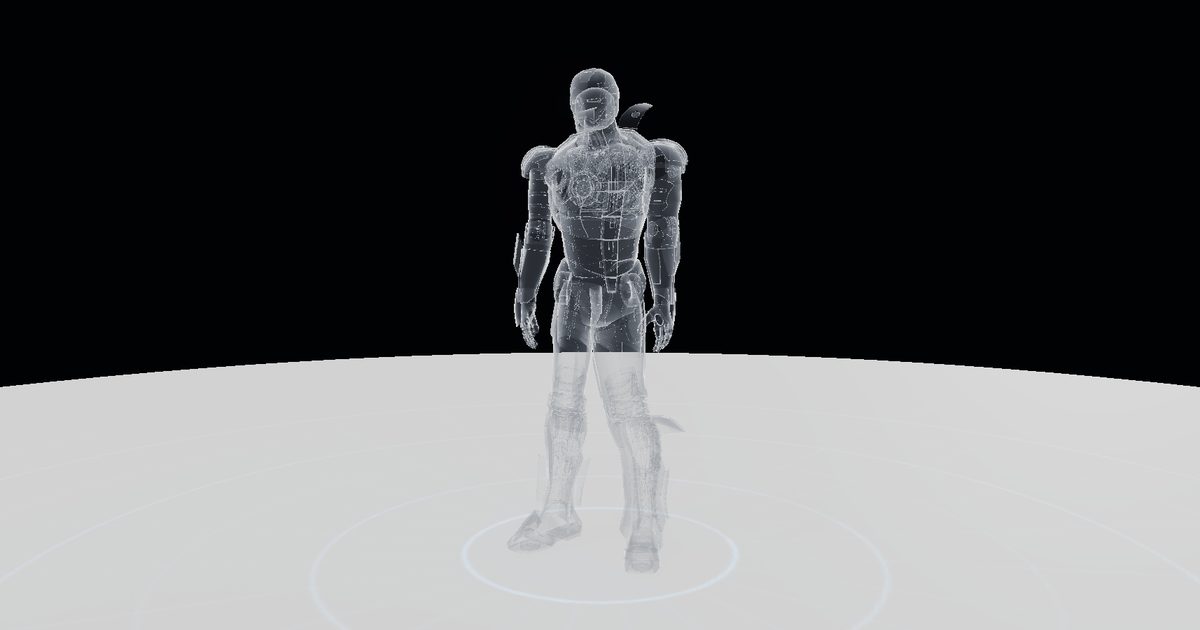
System by system
The suit splits into 8 systems and 81 named parts. Each guide answers the question that system raises, with the real technology that comes closest today.
- 01 / Arc Reactor & Power Bus13 min
Could the Iron Man arc reactor be real?
Not as shown. In the films it makes 3 gigawatts from a chest puck, millions of times the power density of ITER, the largest fusion machine being built. The suit itself needs only a few megawatts, and the best real source for that today is a kerosene jet engine, not a reactor.
- 02 / Armor & Protective Layers14 min
What would a real Iron Man suit be made of?
Not one gold-titanium alloy but a stack of materials: a Ti-6Al-4V titanium frame, boron carbide or silicon carbide strike plates backed by polyethylene or aramid fiber, and gold only as a film about 100 nanometers thick. Real rifle-rated plate weighs about 41 to 45 kg per square meter, so armoring the whole body adds roughly 100 kg before a single motor or thruster.
- 03 / Endoskeleton & Actuation14 min
How would a real Iron Man suit move with its wearer?
As a powered exoskeleton: sensors read the force or muscle signals of the wearer and an electric motor at each joint moves in step. The best real full-body example, the Sarcos Guardian XO, weighs 68 kg, makes a 90 kg load feel like 4.5 kg and draws about 500 W, or about two hours per kilowatt-hour of battery. The film suit's instant, full-range, all-day motion is still beyond any real machine.
- 04 / Flight & Propulsion13 min
Could the Iron Man suit really fly?
Yes, but only briefly and slowly. Real jet suits already hover on five kerosene microturbines, burn about 4 litres of fuel a minute, fly for minutes and have reached 85 mph. Hours of supersonic flight would need a power source and a human body that do not exist.
- 05 / Repulsors & Directed Energy14 min
How would Iron Man's repulsors work in real life?
As drawn, they cannot: NASA's record X3 plasma thruster makes 5.4 newtons from 99 kilowatts, so hovering on such beams would take about 165 of them and 16 megawatts. A real suit would split the repulsor into two machines, a jet that throws air or exhaust for lift and a laser for the weapon, and today's laser weapons run at 30 to 300 kilowatts, limited by stored energy, heat and recoil.
- 06 / Avionics, Sensing & Compute14 min
How would Iron Man's HUD and sensors work?
Most of it exists today in pieces: the F-35 helmet already shows a 30 by 40 degree display fed by six sensors around the jet, headsets redraw the world within 12 milliseconds, and thumb-sized thermal cameras run on 150 milliwatts. The hard limits are latency, field of view, the heat from onboard compute, and the human, since the best implanted brain interfaces decode about 62 words per minute.
- 07 / Life Support & Seals14 min
Could a person survive inside the Iron Man suit?
Breathing and pressure are solved problems: a NASA spacesuit already supplies oxygen, scrubs carbon dioxide and holds pressure for about seven hours. What kills the wearer is acceleration. Unprotected people black out at 4 to 5 g and g-suited fighter pilots at about 9 g, while the turns, stops and landings in the films imply tens to hundreds of g, and no known technology cancels inertia.
- 08 / Thermal Management14 min
How would the Iron Man suit keep its wearer from overheating?
With the layered system a NASA spacesuit already uses: a liquid cooling garment carries the wearer's 300 to 600 watts into chilled water, and a sublimator, a radiator or the passing air dumps it outside. That keeps the human alive. It cannot keep up with powered flight: in a hover, in vacuum or on a hot day, the machine's own waste heat outruns any surface a body can carry.
More questions about the suit
- How much would a real Iron Man suit cost?
About $1.2 million buys the closest real hardware for every system, led by a £340,000 Gravity jet suit and a $400,000 F-35 helmet. Making those parts work as one flying, armored machine is a development program we estimate at $100 million to $1 billion, judging by the US military's $80 million TALOS suit and NASA's billion-dollar spacesuits. The film suit cannot be built at any price; a 3D-printed cosplay suit costs about $1,500.
- Is there a real Iron Man suit?
Not a complete one. Each major part exists as a separate machine: Gravity Industries' jet suit flies at up to 85 mph, powered exoskeletons multiply strength, the F-35 helmet is a working HUD and NASA's spacesuit keeps a person alive for hours. The one program that tried to combine them, the US military's TALOS suit, was cancelled in 2019.
- How much does the Iron Man suit weigh?
In the comics, Marvel lists Iron Man at 425 lb (193 kg) in armor and 225 lb without it, while the films give no official weight for the Mark III or later suits. The real Mark I costume from the 2008 film weighed about 90 lb (41 kg). A real, rifle-proof suit would weigh about 190 to 220 kg empty, 270 to 300 kg with its wearer, and about 360 kg fueled to fly.
- How does the Iron Man suit work?
As a powered exoskeleton in layers: a sensor undersuit reads the wearer, a titanium frame and joint motors move with them, armor plates sit on top, and one power source feeds everything. In flight the boots give about three quarters of the lift and the palms steer, while a helmet display, oxygen supply and cooling garment keep the pilot informed, breathing and alive. Every piece has a real counterpart today; what no real machine has is the power, the heat rejection and the g-tolerance to run them all at once.
- How fast could the Iron Man suit fly?
A real jet suit has flown at 85 mph (137 km/h), the Guinness record set in 2019. Going faster is a drag problem: the power needed grows with the cube of speed, about 2 megawatts just below the speed of sound and 8 megawatts at Mach 3, with the suit's nose heating past 300 °C. The films' Mach 5 suits would need a power source that does not exist and would glow at over 1,000 °C.
- How strong would a real Iron Man suit be?
About as strong as today's best exoskeleton, the Sarcos Guardian XO, which makes a 90 kg load feel like 4.5 kg, a 20 to 1 boost. Lifting a 1,500 kg car is possible in principle: hydraulics supply the force and about 15 kilowatts lifts it in a second. But held at arm's length it needs ten times the torque any real exoskeleton joint makes and would tip the suit onto its face, so a real suit could only lift a car overhead, slowly, on firm ground.
- Could the Iron Man suit fly to space?
Not on jet engines: they burn oxygen from the air, which runs out long before space. A rocket-powered suit could make a short hop above 100 km carrying about its own weight in propellant, but reaching orbit takes a takeoff mass about 24 times the suit and wearer, 96% of it propellant, and coming back needs a heat shield like the Space Shuttle's, built for about 1,650 °C.
- Iron Man suit physics worksheet (free, with answer key)
Ten physics problems for high school and early college students, each built on a real number behind the Iron Man suit: forces and weight, thrust, fuel, power, density, heat and acceleration. A worked answer key follows the questions, and the whole worksheet is a free PDF to print or share with a class.
- Iron Man suit science worksheet for middle school (free, with answers)
Eight science problems for students aged about 11 to 14, each built on a real machine behind the Iron Man suit: the jet suit that flies today, a real powered exoskeleton and the metals a real suit would use. They cover mass and weight, speed, density, balanced forces, energy and heat. An answer key follows, and the worksheet is a free PDF to print or share with a class.
- How much fuel would it take to fly you in the suit?
The flight calculator: enter your weight, pick a real suit and a hover time, and see the jet fuel, thrust and engines it would take.
- What are the parts of the Iron Man suit?
All 81 parts, from the helmet to the boots: what each one does, what it would be made of and how it moves.
The verdict at a glance
Each row is one system of the suit, set against the closest real hardware in 2026. The guides above carry the full math and the sources.
| System | What the films ask of it | Closest real thing today | Verdict |
|---|---|---|---|
| Power | 3 GW from a chest-sized reactor | Kerosene microturbines; the best batteries hold about 500 Wh/kg | Fiction |
| Armor | Stop rifle fire and worse while staying light enough to fly | Ceramic rifle plates at 41 to 45 kg per square meter | Real, but about 100 kg for full coverage |
| Motion | Instant, full-range, superhuman strength | Sarcos Guardian XO: 68 kg, makes a 90 kg load feel like 4.5 kg, about 500 W | Exists in part, slower and tethered to its battery |
| Flight | Hours of supersonic flight | Gravity Industries' five-turbine jet suit: 85 mph record, minutes of fuel | Exists, briefly and slowly |
| Repulsors | Lift and a weapon beam from the same palm | NASA's X3 thruster: 5.4 N from 99 kW; laser weapons at 30 to 300 kW | Must split into a jet and a laser |
| HUD and sensors | An all-seeing display and an instant assistant | F-35 helmet with a 30 by 40 degree display; headsets that redraw in about 12 ms | Mostly exists |
| Life support | Air, pressure and surviving every crash | NASA's spacesuit: about 7 hours of air; pilots in g-suits tolerate about 9 g | Air yes, the g-forces no |
| Cooling | Never overheats | Spacesuit cooling garments sized for 290 W average, 580 W peak | The wearer yes, the machine no |
The three walls
Most of the suit fails gracefully: a real version is heavier, slower or shorter-lived than the film one, but it works. Three problems do not bend that way.
1. Power density. In the films the reactor makes three gigajoules per second, which is 3 GW. The best-known body-worn machine that actually flies, the Gravity Industries jet suit, is quoted at about 1,050 to 1,500 horsepower, or roughly 0.8 to 1.1 MW. The arc reactor is about 3,000 times that, from something the size of a hockey puck. The arc reactor guide compares it with ITER, fission, radioisotope generators, batteries and capacitors: none of them comes close per kilogram, and the best real power source for a suit today is still a jet engine burning kerosene.
2. Heat. Every watt the suit uses ends up as heat inside the shell. A real radiator near body temperature sheds about 350 W per square meter, so rejecting 3 GW would need about 3,000,000,000 / 350 = 8.6 million square meters of surface. A person offers about 2. In air, moving air does most of the work; in a hover, in vacuum or on a hot day, the machine's waste heat outruns anything a body can carry. The cooling guide covers the hardware that does exist, and the heat article makes the full case.
3. The human. People who are not protected black out at about 4 to 5 g, and fighter pilots in g-suits hold about 9 g, according to the FAA's pilot brochure on acceleration. The turns, stops and landings in the films imply tens to hundreds of g. Nothing in physics cancels inertia, so even a perfect machine would kill its pilot. The life support guide works through the numbers.
How much would a real Iron Man suit weigh?
Start with the armor. Ceramic plates rated against rifle fire weigh about 41 to 45 kg per square meter, and a suit's outer surface for a 180 cm, 80 kg wearer is about 2.4 square meters, so full coverage is about 100 kg. A frame strong enough to carry that adds at least as much as the Sarcos Guardian XO, which weighs 68 kg. That puts a rifle-proof suit near 170 to 200 kg empty, or about 250 to 280 kg with its wearer.
Hovering 280 kg takes 280 x 9.81 = about 2,750 N of thrust, all the time. That is more than double the roughly 1,200 N the flight guide estimates for Gravity's jet suit, which is why a real suit faces a choice the films never make: armor or flight. The armor guide builds the estimate plate by plate, the flight guide shows what each extra kilogram costs in fuel, and how much the Iron Man suit weighs sets the full mass budget beside the films' figures and the real costumes.
What you could build today
Put the best real pieces together and you get a machine that works, just not the one on screen:
- A jet suit of five kerosene microturbines, one on the back and two on each arm, that flies for minutes. Gravity Industries has flown one at a record 85 mph.
- A powered exoskeleton that lifts 90 kg as if it were 4.5 kg, for about two hours per kilowatt-hour of battery.
- A helmet display on the pattern of the F-35's, fed by cameras all around the wearer.
- A spacesuit-style life-support pack with oxygen, a carbon dioxide scrubber and a liquid cooling garment, good for hours.
- Ceramic plates over the vital organs rather than everywhere.
Each of these exists, and the real Iron Man suits page shows where each one stands today. What does not exist is a way to carry all of them at once and still fly, because their weights add up while their power sources do not. Bought or built from the best real hardware, the pieces would also cost far more than any one of them suggests.
FAQ
Could the Iron Man suit be built in real life?
Parts of it already have been: jet suits, powered exoskeletons, helmet-mounted displays and spacesuit life support are all real. A single suit that does all of it at film performance cannot be built, because no power source, cooling system or human body can meet its numbers.
How much would a real Iron Man suit weigh?
About 170 to 200 kg empty with rifle-rated armor over the whole body, or 250 to 280 kg with its wearer. The armor alone is about 100 kg.
What is the hardest part of building an Iron Man suit?
Not the reactor, surprisingly, since a suit only needs a few megawatts. The hardest parts are rejecting the waste heat from a body-sized shell and keeping the pilot alive through the accelerations the films show.
Has anyone built a working Iron Man suit?
Not a complete one. The closest real machines are Gravity Industries' jet suit, which flies, and full-body exoskeletons such as the Sarcos Guardian XO, which multiply strength. No machine yet combines flight, armor and powered motion in one suit.
Where can I see every part of the suit?
In the interactive 3D teardown: orbit the suit, pull it apart and click any plate to see what it would be made of and the physics behind it.
See every part in place in the interactive 3D teardown, or read why heat, not power, is the suit's real enemy.